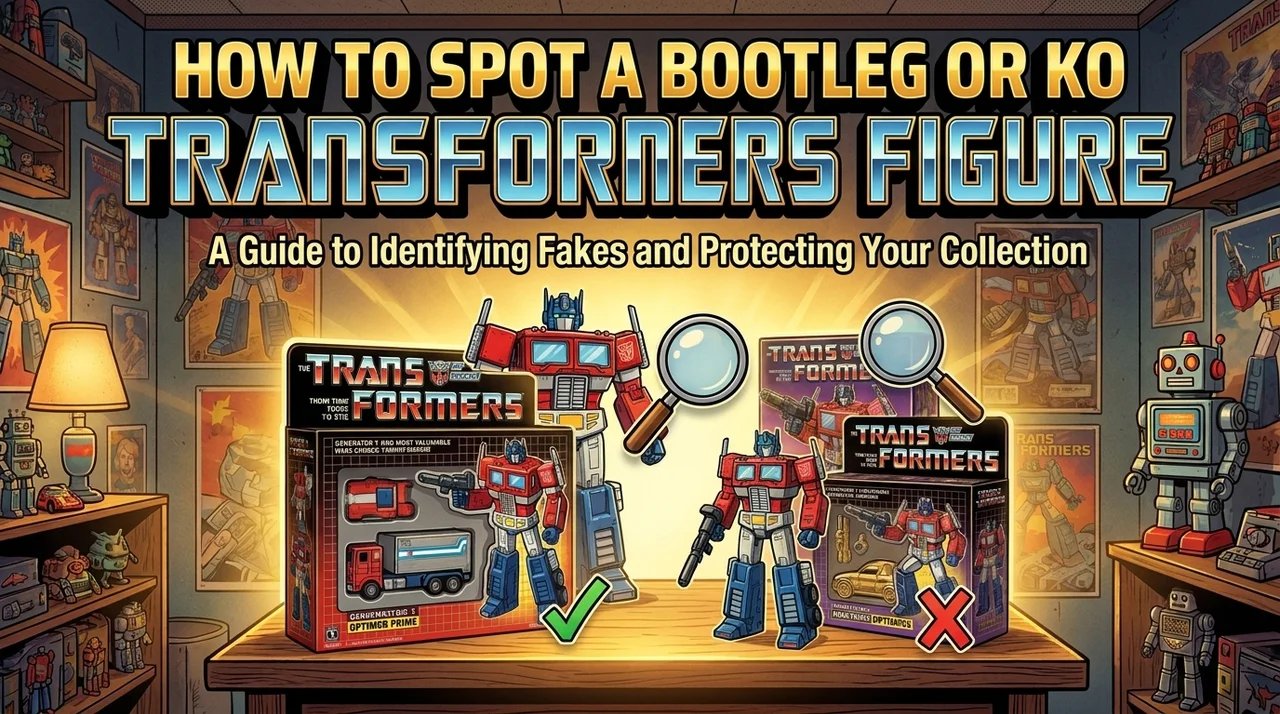
Transformers collecting has a real counterfeit problem. Collectors call these fakes “KOs,” short for knockoffs, and they’ve existed almost as long as the toy line itself. Some are obvious at a glance. Others are convincing enough to fool an experienced buyer. This guide walks through the checks that actually work.
Why This Matters for Sellers, Not Just Buyers
If you’re getting ready to sell a collection, this isn’t only a buyer’s concern. A figure passed down through family, bought secondhand, or picked up years ago from an unknown source could be a KO without you realizing it. This risk is highest for the desirable G1 era.
Catching this before you sell keeps the process smooth and your quote accurate. It also protects your reputation with any buyer, since a serious collector or dealer will catch a KO quickly. That’s a far better conversation to have with yourself first.
Check the Plastic Quality
Genuine Transformers figures use specific, consistent plastic formulations that feel a certain way in your hand. KOs frequently use cheaper plastic that feels lighter, more brittle, or noticeably different in texture.
Color accuracy is another tell. Bootleg figures often use colors that are close to the original but slightly off. Watch for shades too bright, too dull, or not quite matching confirmed authentic reference photos.
Examine the Transformation Engineering
This is one of the most reliable checks for anyone who knows the specific figure well. Genuine Transformers figures use precise engineering to transform smoothly between modes. KOs often copy the general shape without matching the internal engineering exactly.
That shows up as stiff joints, misaligned parts, or a transformation sequence that feels different from a known original.
Owned or handled a genuine example of the same figure before? Side-by-side comparison of the transformation feel is one of the fastest ways to catch a fake.
Check for Manufacturer Stamps and Markings
Authentic figures carry specific manufacturer markings molded into the plastic, typically including a copyright date and country of manufacture. KOs frequently skip these markings entirely, blur them, or use incorrect wording and formatting.
Check tampographed markings too, the printed details like faction symbols or tech spec numbers applied directly to the plastic.
Genuine tampos are crisp and precisely placed. KO tampos often look smudged, misaligned, or printed in a slightly wrong location.
Check the Packaging Closely
Original vintage boxes have specific, consistent print quality, color accuracy, and layout that changed in documented ways across releases. Bootleg packaging often shows blurry printing, incorrect fonts, or colors that don’t quite match genuine examples.
Look closely at any included tech spec bio card, a detail included with many original figures. KOs frequently omit this card entirely or reproduce it with visible quality issues, like blurry text or incorrect character stats.
Check the Price
Price is one of the simplest checks, and one of the most reliable.
Genuine rare or G1 figures hold fairly consistent pricing across trusted sellers. A price dramatically below what a real example of that figure typically commands is one of the strongest signals of a KO.
Sellers moving counterfeits often price low to move inventory quickly before a buyer catches on.
Before buying anything that looks rare, compare the asking price against a few reputable sources. A real bargain on a common figure is normal. A steep discount on something that’s supposed to be scarce almost never is.
No Single Check Is Enough on Its Own
The most reliable authentication looks at several factors together rather than any single detail. Plastic quality, transformation engineering, manufacturer markings, packaging, and price all get checked at once.
A KO might nail one or two of these convincingly while getting the rest wrong. A genuine original should hold up across all of them.
What to Do If You Find a KO in Your Collection
If you’ve gone through these checks and you believe a figure isn’t genuine, don’t try to sell it as one. Set it aside separately from the rest of your collection.
We only purchase authentic, new-in-box toys here, and sorting out anything you suspect isn’t original ahead of time keeps your quote accurate. If most of your collection checks out, check our guide on the rarest and most valuable Transformers toys next. It’ll help you understand what your genuine pieces might be worth.
Sell Your Authentic Transformers Collection to Us
Once you’ve confirmed what you have is genuine, turning it into cash is simple.
Use our online toy pricer or app to tell us what you have. We’ll review your submission and send back a fair offer, usually within a couple of days.
We charge no listing fees. You won’t photograph dozens of figures yourself. You won’t wait on buyers one at a time.
People Also Ask…
KO stands for knockoff. It refers to a bootleg figure made to imitate a genuine Transformers toy, usually without the original manufacturer’s license or engineering.
Check the price first. A figure priced dramatically below what genuine examples typically sell for is a strong warning sign. From there, check plastic quality, manufacturer stamps, and transformation engineering.
Often, yes, once you know what to look for. Differences show up in plastic quality, color accuracy, tampo printing, and how smoothly the figure transforms between modes.
Sometimes, but the markings are often blurred, incorrectly worded, or formatted differently than genuine examples. Compare them against a clear photo of an authentic figure if you’re unsure.
Set it aside separately from your authentic pieces, and don’t try to sell it as genuine. If you bought it recently, check whether the seller or payment provider offers any protection for counterfeit items.