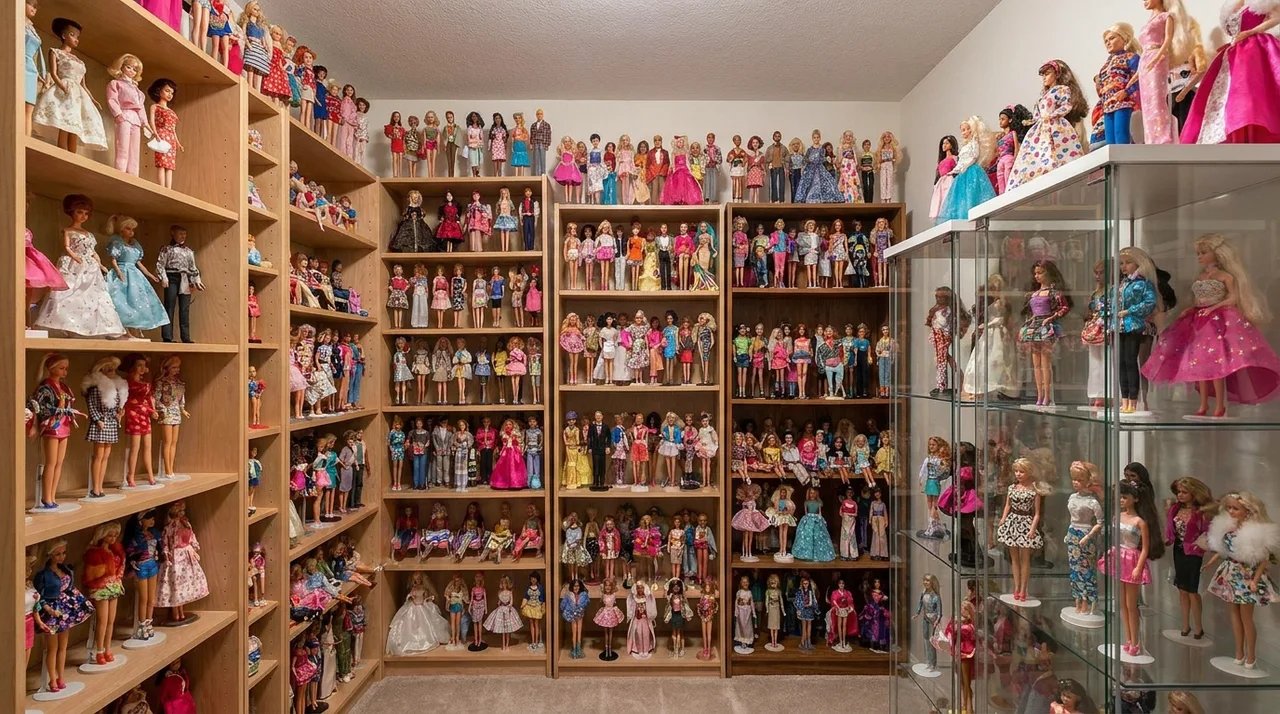
When it comes to selling a large Barbie collection, sometimes things can become complicated. At some point, a Barbie collection stops being a hobby and starts being a logistics problem.
Maybe it’s two hundred dolls. Maybe it’s a whole attic full, built up over decades by one collector or passed down through a family.
Whatever the number, selling one Barbie is easy. Selling hundreds of them is a completely different job.
This guide walks through why that’s true. It covers how to sort a big collection before you sell, and the real options once you’re ready to move it.
Why a Big Collection Changes Everything
Selling a single Barbie online takes maybe fifteen minutes. Photograph her, write a short description, list her, and wait for a buyer. Completely manageable for one doll, or even a dozen.
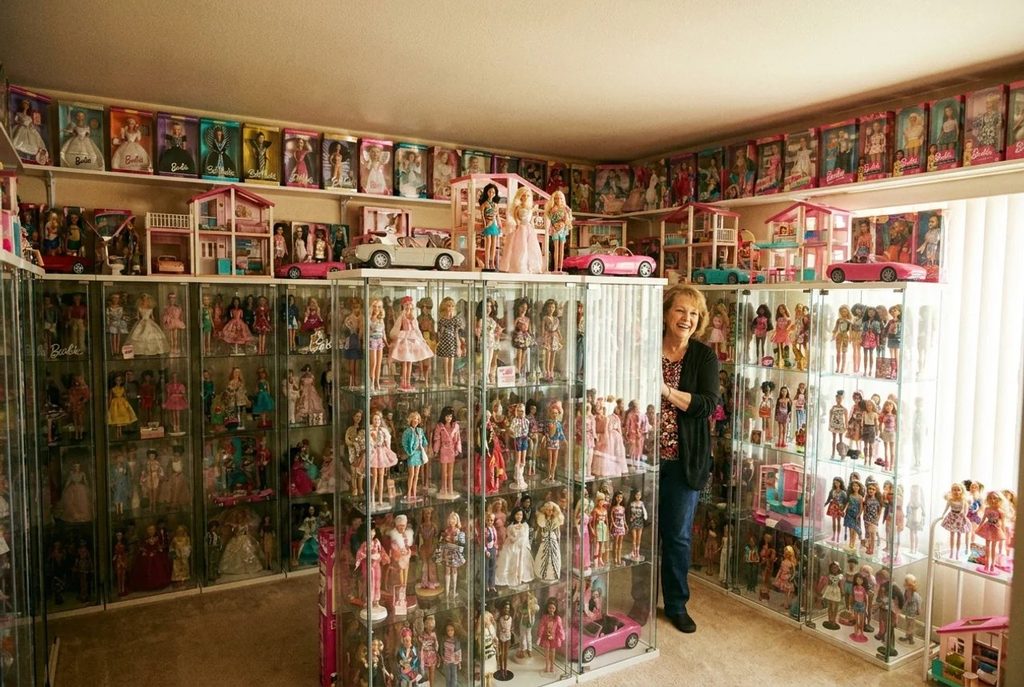
Multiply that by two hundred, and the job changes entirely. Every doll needs her own photos, since buyers want to see exactly what they’re paying for. Every listing needs its own description, since a jumbled group post rarely gets real attention. Some dolls sell fast.
Others sit for months waiting on the right buyer. Spread that uncertainty across hundreds of listings, and you’re not just doing more work. You’re doing it indefinitely, with no clear finish line.
That’s the real cost of selling a large collection piece by piece. It’s not that any single sale is hard. It’s that the job never really ends, which is exactly why so many big Barbie collections sit untouched for years.
Sort Before You Sell Your Large Collection
Before deciding how to sell, get a rough sense of what you’re actually holding. You don’t need a full inventory. You need a general shape.
Most large collections break into three loose groups once you actually go through them.
A big pile of common dolls. This is almost always the majority of a large collection: dolls from the 1980s, 1990s, and 2000s, produced in huge numbers for the general toy market. Individually, they’re worth a modest amount each, and the effort of listing them one by one rarely pays for itself.
A smaller group of nicer or named-line dolls. Think Bob Mackie designs, Silkstone releases, Holiday Barbies, and other named collector lines. These deserve more individual attention than the common pile. Our guide on selling Bob Mackie Barbie dolls covers one of the most collected lines specifically.
A handful of genuine early or rare dolls, if you’re lucky. Anything from 1959 through the mid-1960s belongs in this group, along with any documented rare release. Most large collections have a few of these at most. Some have none. Our guide on the rarest and most valuable Barbie dolls covers what to look for.
Sorting into these three groups, even roughly, gives you a much clearer path forward than guessing.
Your Options for Selling a Large Collection
Selling everything individually. This gets you the highest total return in theory. Every doll gets her own listing, her own price, and her own shot at the right buyer. For a collection of twenty or thirty dolls, this makes sense.
For hundreds, it becomes something closer to a second job, one that can stretch across months. A lot of sellers who start this way burn out well before reaching the bottom of the box.
Selling the whole thing as one lot. Some sellers post their entire collection as a single listing. This cuts the work down to one post. This shrinks your buyer pool dramatically. Few people want to buy hundreds of dolls in one purchase.
Interested buyers usually expect a steep discount for taking everything at once.
Selling to a direct buyer. This is the fastest option, and it’s built for situations exactly like this one. You send your whole collection to a buyer who handles sorting, listing, and reselling the individual pieces. You get one offer and one payment instead of chasing down hundreds of small transactions over months.
The Smart Middle Path
Most experienced sellers with large collections split the difference. They pull out anything identified as genuinely rare or from a named collector line. Then they consider listing those individually, where the right buyer can find them. Then they sell the rest, usually the overwhelming majority of the collection, as a bulk lot.
This captures extra value where it actually exists. It skips forcing the same individual-listing effort onto hundreds of common dolls that were never going to command a premium.
What to Expect When You Sell in Bulk
Condition matters, even for common dolls. We only buy new-in-box dolls here. So it’s worth checking which of your dolls are still sealed or boxed before you submit your collection. Our guide on whether the box matters for Barbie doll value explains exactly why this distinction carries so much weight.
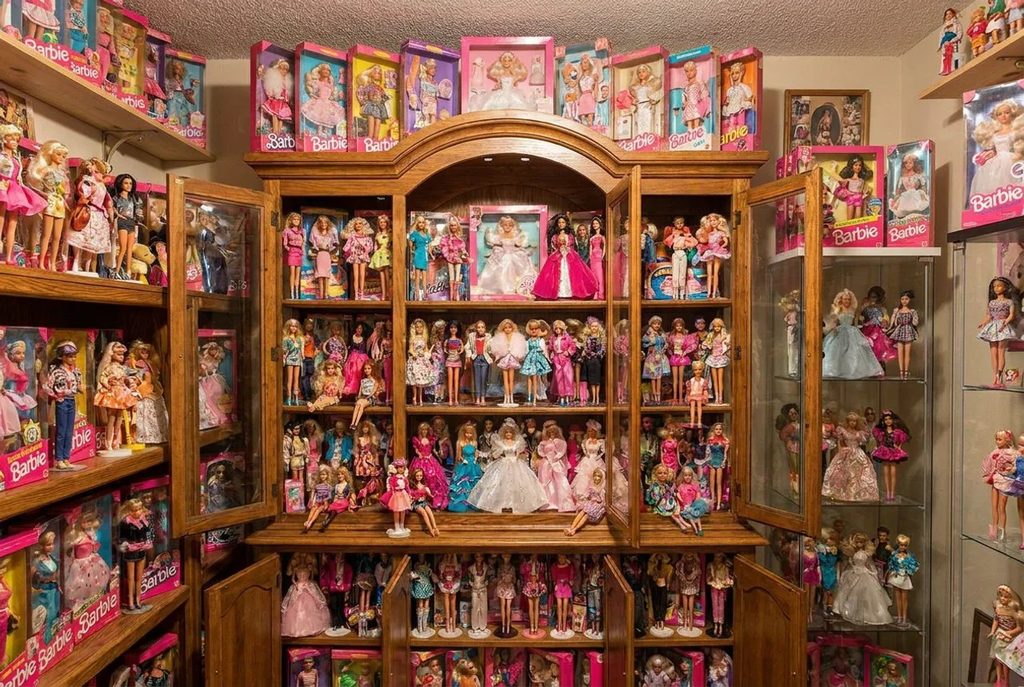
A rough, honest count matters more than a perfect inventory. You don’t need to identify every single doll by name before reaching out. An honest estimate of how many boxed dolls you have and their general condition is enough for an accurate offer.
Mixed collections are completely normal. Nobody expects a large Barbie collection to be one uniform set. A mix of eras, lines, and styles is exactly what a bulk buyer is used to sorting through.
How to Sell Your Large Barbie Collection to Us
We buy Barbie collections of all sizes, and this is exactly the kind of sale we’re built to handle well.
Step 1 — Connect. Tell us roughly how many boxed dolls you have. A photo of the collection and a rough count is usually all we need, no detailed inventory required.
Step 2 — Get a quote. We review what you’ve submitted and send back a fair offer, typically within a couple of days.
Step 3 — Send and get paid. If you accept, we arrange shipping. Once your collection arrives and checks out against what you told us, you’re paid within 48 hours by check, Venmo, or PayPal.
No listing fees. No photographing hundreds of individual dolls yourself. No waiting on buyers one at a time for months on end.
People Also Ask…
There’s no exact cutoff, but anywhere from a hundred dolls on up is usually where individual listing stops making practical sense. If photographing and listing each one sounds overwhelming, that’s a sign you’re in bulk territory.
No. A rough total count and a general sense of condition is enough to get started. You don’t need to identify every individual doll ahead of time.
If you’ve identified anything genuinely early, rare, or from a named collector line, it’s often worth setting those aside and researching them further. The rest of a large collection can still move quickly as a bulk sale.
For selling to us specifically, yes. We only purchase new-in-box dolls. Loose or played-with dolls fall outside what we’re able to offer on. Sort your collection by box condition before you submit it.
On a per-doll basis, usually yes. But individual selling across a large collection means an enormous amount of listing work spread over months. Bulk selling trades some of that top-end price for speed and simplicity.