Serious Funko collectors talk about grading a lot. It sounds like it should boost your resale price. Sometimes it does. Often it doesn’t pay for itself.
This guide explains what grading actually does. It covers what grading costs right now. It gives you a simple way to decide if grading makes sense before you sell.
What Grading Actually Means
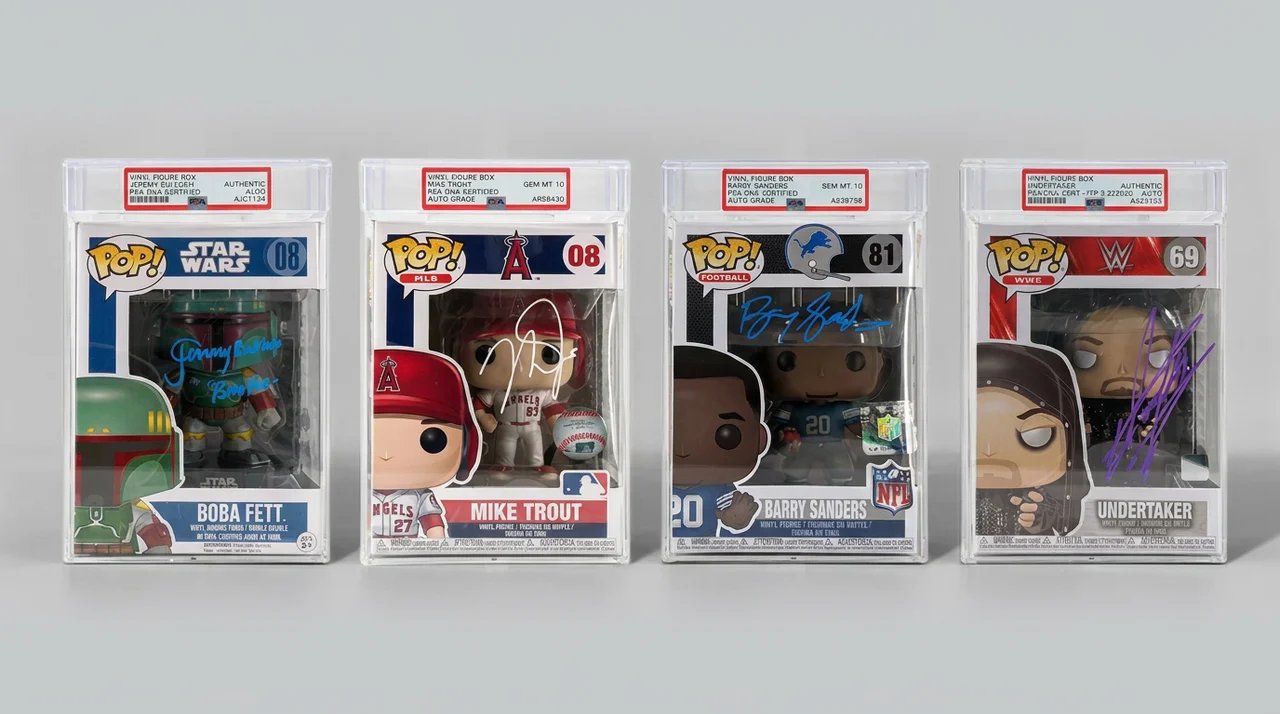
Grading means a professional company inspects a Funko Pop’s condition. Most graders focus mainly on the box. A grader checks corner sharpness, window clarity, sticker alignment, and overall packaging condition. The grader then assigns a number, usually on a 1 to 10 scale. The figure goes into a protective case along with its grade. This gives buyers confidence in the condition without inspecting the item themselves.
This solves a real problem. Two sellers might both call their Pop “mint condition.” That phrase means different things to different people. A grade attaches an independent, standardized number instead.
What Changed in the Grading Market Recently
PSA once dominated Funko Pop grading. The company built its authority grading trading cards and sports memorabilia first, then brought that same authority to vinyl figures. That changed on December 1, 2025. PSA stopped accepting new submissions for full Funko grading, reholder, and dual-service that day. PSA still processed submissions it received before the cutoff.
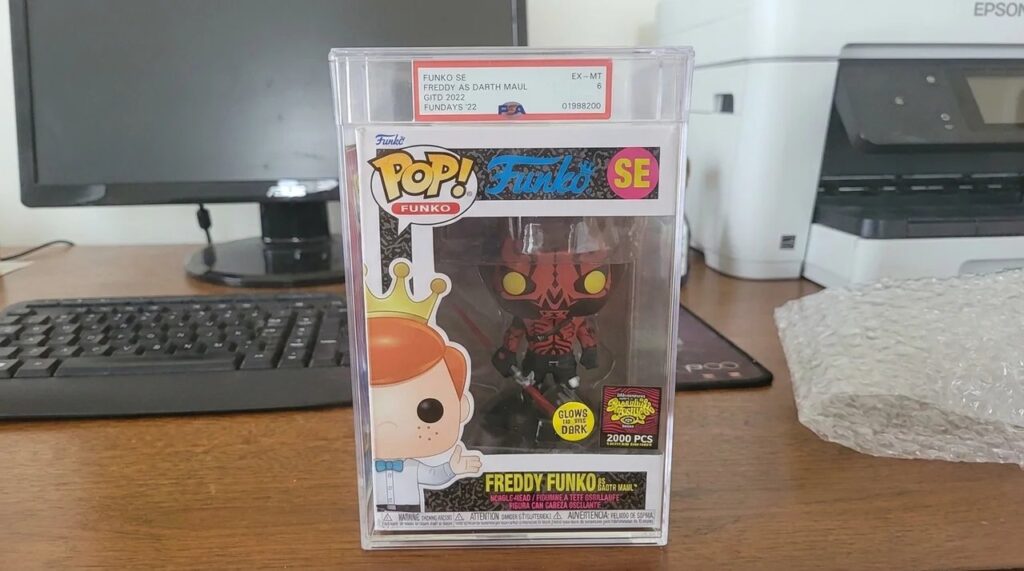
PSA didn’t cut this service quietly. Funko itself was losing serious money that year. Funko reported a $41 million loss in the second quarter of 2025 alone. Funko’s total losses reached $61 million across the first half of 2025. The company also cycled through two different CEOs that year.
When a manufacturer loses that much money, the grading market around its product tends to shake too. PSA’s exit looks like a direct response to a shrinking, less certain market.
PSA hasn’t left the Funko world completely. PSA still authenticates autographs on signed Funko Pops. These items get PSA’s blue label. That label confirms the signature only. It doesn’t grade the figure or box condition at all.
Who Still Grades Funko Pops
PSA’s exit left a real gap. It didn’t leave the hobby without options. A few services stepped in or expanded their presence.
VVGS (The Vinyl Vault Grading System) actually predates PSA in this space. VVGS created Funko Pop grading back in 2018, years before PSA entered the market. VVGS grades all six sides of the box plus the figure itself. The company encapsulates each piece in a clear acrylic case. Every case includes a QR code linking to an authentication page. Many longtime Funko collectors already preferred VVGS’s case quality over PSA’s, even before PSA’s exit. This makes VVGS a well-established option, not a new one.
CGC dominates comic book grading. The company has been staffing up to enter Funko Pop grading directly. CGC’s reputation in comics matches PSA’s old reputation in cards. CGC could become a leading option if it launches a full Funko grading service with the same standards. CGC’s Funko rollout is still developing as of now. Check CGC’s current offerings directly before you submit anything.
PGS (Pops Grading Services) is a smaller, Funko-specific grading company. PGS has operated for a while now. The company uses a similar 1-to-10 scale. PGS graders examine all six faces, eight corners, and the figure itself. PGS has less name recognition than PSA or VVGS. Collector opinion on PGS stays more mixed. Still, PGS remains an active option worth knowing about. Some sellers already list PGS-graded Pops on marketplaces like eBay.
Check current reviews and collector sentiment before you pick a service. This corner of the grading market is still settling after PSA’s exit. Reputations can shift quickly while newer services build their track records.
What Grading Actually Costs
Pricing varies by service and turnaround speed. As a general range, expect to pay $40 to $75 or more per figure for standard grading. Faster turnaround options cost more, sometimes significantly more. Slower standard service sits at the lower end of that range.
That price applies per figure. Costs add up fast if you’re grading several Pops from a larger collection. And no grading service guarantees every figure comes back with a grade high enough to justify the cost.
Does Grading Actually Increase Value?
Yes, for the right figure, sometimes substantially. Desirable, scarce Pops with high grades have sold for meaningfully more than their ungraded counterparts. Some graded pieces command premiums well above what the same figure fetches raw.
That upside concentrates almost entirely in one category: figures that were already valuable and scarce before grading entered the picture. Grading doesn’t create value from nothing. It adds documentation and buyer confidence to value that already exists.
A common ten-dollar Pop doesn’t become a hundred-dollar Pop just because it earns a high grade. It becomes a ten-dollar Pop in a protective case that cost you forty to seventy-five dollars.
The Simple Rule of Thumb
Regular graders tend to follow one basic guideline. Only grade a Pop worth at least five times the cost of grading it.
Say grading costs you $50. That means a figure needs to be worth at least $250 ungraded before you submit it. Anything below that threshold usually loses money, even if the figure earns a strong grade.
This rule exists for a clear reason. Grading costs stay fixed no matter what you submit. But grading doesn’t guarantee a value bump, and the actual bump varies by figure, buyer pool, and the grade you receive. A low or middling grade on an already-modest Pop can leave you worse off than before. You’ll have paid the grading fee with little to show for it.
When Grading Makes Sense
Consider grading seriously when a figure checks most or all of these boxes. It’s genuinely rare or vaulted. It ties to a franchise with strong ongoing demand. It already sells for several hundred dollars or more ungraded. And you believe its packaging sits in excellent, near-mint condition.
Our guide on the rarest and most valuable Funko Pops covers real examples in this category. Grading makes sense if you’ve identified something in your collection that resembles those examples. This holds especially true if you plan to sell it individually rather than as part of a larger lot.
When Grading Doesn’t Make Sense
Grading isn’t worth pursuing for most of a typical collection. Common, current-production figures don’t carry enough baseline value. A grading premium can’t cover the cost on these, let alone turn a profit. The same goes for figures with visible condition issues already. A mediocre grade won’t do much for a Pop that wasn’t going to command a premium anyway.
Remember that grading takes time too. Turnaround can run anywhere from a few weeks to a few months, depending on the service and tier you choose. Tying up your most valuable pieces in a grading queue works against you if you want to sell your collection soon.
Grading Versus Just Selling As-Is
Here’s the practical trade-off. Grading costs money upfront. Grading takes time. Grading only pays off on a narrow slice of genuinely valuable figures. Selling as-is costs nothing upfront and lets you move on immediately. You might accept a slightly lower price on the one rare piece that could have benefited from a high grade.
Most sellers work through a real collection, not a single grail figure. For most sellers, skipping grading and selling as-is makes more practical sense. The math only favors grading on a small number of standout pieces. Even then, it only works if you feel confident the figure will grade well.
What This Means for Your Collection
Our guide on how to tell which of your Funko Pops are valuable offers a useful first step here. Use it to sort your collection and spot anything worth grading. Once you’ve identified anything that might clear the five-times-the-fee threshold, research grading services for that short list. Sell everything else as-is instead.
Sell Your Funko Pop Collection to Us
You might own a figure worth grading. You might own a shelf of common Pops. Either way, we make it simple to turn your collection into cash without the wait.
Use our online toy pricer or app to tell us what you have. We’ll review your submission and send back a fair offer, usually within a couple of days. You won’t need a months-long grading queue.
We charge no listing fees. You won’t photograph dozens of pieces yourself. You won’t wait on buyers one at a time. Our guide on how to sell a large Funko Pop collection covers that process in detail if your collection runs into the hundreds.
People Also Ask…
Standard grading typically costs $40 to $75 or more per figure. The exact price depends on the service and turnaround speed you choose. Faster options cost significantly more.
No. PSA stopped full Funko grading, reholder, and dual-service submissions on December 1, 2025. This followed major financial losses at Funko itself. PSA still authenticates autographs on signed Pops. VVGS, which actually predates PSA in Funko grading, and CGC, which has been expanding into the space, serve as the main alternatives now. A smaller service called PGS also grades Pops.
Only grade a figure worth at least five times the grading fee. Say grading costs $50. The Pop should be worth at least $250 ungraded before you submit it.
Not usually. Grading adds documentation and buyer confidence to value that already exists. It doesn’t create significant value in a figure that wasn’t already scarce or in demand.
No, not for most collections. Grading only makes financial sense for a small number of genuinely valuable, rare figures. You should sell the rest of a collection as-is rather than delay it in a grading queue.