At some point, a Funko Pop collection stops being a hobby and starts being a logistics problem. Maybe you’ve got two hundred Pops. Maybe it’s closer to a thousand, stacked in boxes because the shelves ran out of room years ago.
Whatever the number, if you’ve decided to sell, you’ve probably already run into the obvious problem: selling one Pop is easy, and selling hundreds of them is a completely different job.
This guide walks through why large collections need a different approach than small ones, how to figure out what you actually have before you sell anything, and the real options in front of you once you’re ready to move a big collection.
Why a Big Collection Changes Everything
Think about what it takes to sell a single Funko Pop online. Take a photo. Write a short description. List it. Answer a question or two from an interested buyer. Package it up and ship it once it sells.
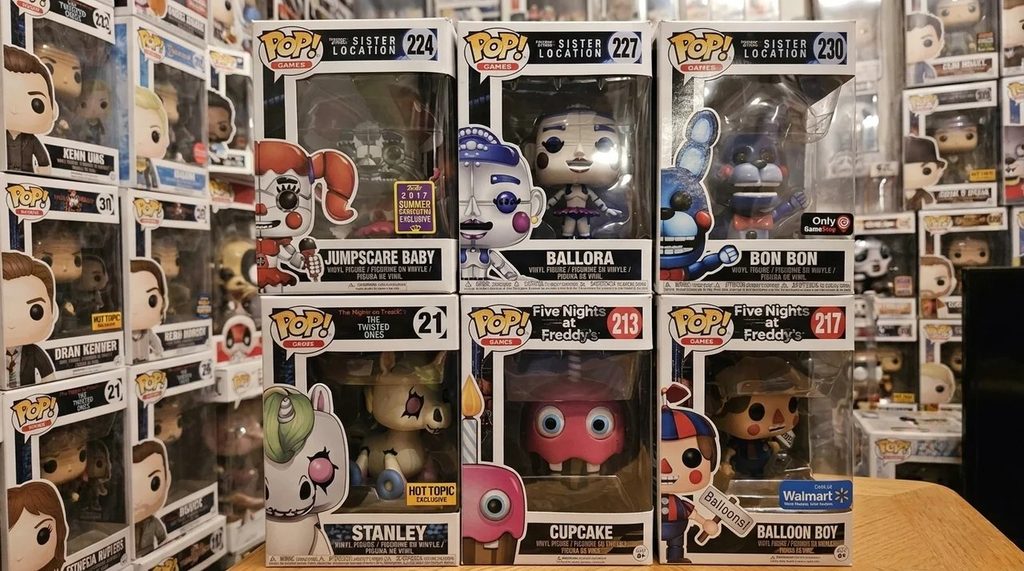
That’s a fifteen-minute task, maybe twenty if the buyer has questions. Completely manageable for one Pop, or even a dozen.
Now multiply that by three hundred. Suddenly you’re not looking at fifteen minutes of work. You’re looking at fifteen minutes, repeated three hundred times, stretched across however many weeks or months it takes buyers to actually show up for each individual listing. Some Pops in a big collection sell within a day. Others sit for months before the right buyer finds them. Multiply that unpredictability across hundreds of listings, and you’re not just doing more work, you’re doing it indefinitely, with no clear end date.
That’s the real cost of selling a large collection piece by piece. It’s not that any single sale is hard. It’s that the job never really finishes, because there’s always another box of Pops waiting behind the ones you just sold.
This is exactly why so many big Funko Pop collections never get sold at all. The task feels too large to start, so it just sits there, taking up space and slowly losing value as newer collectors move on to different things.
Start By Actually Looking at What You Have
Before you decide how to sell, it helps to know roughly what you’re sitting on. You don’t need a full spreadsheet with every single figure logged. You do need a rough sense of the shape of your collection, because that shape determines your best path forward.
Most large collections break down into three loose categories once you actually look through them.
The bulk of common Pops. This is almost always the biggest category by far, often the vast majority of everything you own. These are mainline releases that Funko made by the tens of thousands. They’re not worthless, but they’re not going to fund a vacation either. Individually, they’re worth close to what you paid, sometimes a little less once you factor in the effort of selling them one at a time.
A smaller group of exclusives and less common figures. Convention exclusives, store-specific variants, chase figures, and anything tied to a franchise that’s currently popular tend to fall here. These are worth more attention than the common stock, and they might be worth listing individually rather than lumping them in with everything else.
A handful of genuine grails, if you’re lucky. Vaulted figures with tiny original production runs, rare convention exclusives, or anything with a documented sales history in the thousands of dollars. Most large collections have a few of these at most. Plenty have none.
If you want a deeper look at what separates a real grail from something that just feels rare, our guide on the rarest and most valuable Funko Pops covers several documented examples and what made them valuable.
Sorting roughly into these three piles, even without a formal inventory, gives you a much clearer picture than guessing. It also sets you up to make a smarter decision about how to actually sell.
Your Options for Selling a Large Collection
Once you know roughly what you have, there are really three paths in front of you, and each one trades speed for money in a different way.
Selling Everything Individually
This gets you the highest total return, at least in theory. Every Pop gets its own listing, its own price, and its own shot at finding the right buyer willing to pay a premium. The problem is scale. For a collection of twenty or thirty Pops, this approach is completely reasonable.
For a collection in the hundreds, it becomes something closer to a second job, one that can realistically eat up months of evenings and weekends before you’re done. A lot of sellers who start this way with a big collection burn out well before they reach the bottom of the box.
Selling The Whole Thing As One Lot
Some sellers try to shortcut the individual-listing grind by posting their entire collection as a single listing, either on eBay, Facebook Marketplace, or in a collector group. This does cut down the listing work to a single post instead of hundreds.
But it comes with a real trade-off: your buyer pool shrinks dramatically, since not many people are in the market to buy three hundred Pops in one purchase.
The buyers who are interested in a lot like that usually expect a steep discount in exchange for taking the whole thing off your hands, which can mean leaving real money on the table if your collection includes anything genuinely valuable buried in the mix.
Selling To A Dedicated Bulk Buyer
This is the fastest option, and it’s built specifically for situations like yours. You send your whole collection to a buyer who specializes in purchasing and reselling in volume, and they handle sorting, listing, and reselling the individual pieces themselves.
You get one offer and one payment, instead of chasing down hundreds of small transactions over months. There’s nothing to photograph piece by piece, nothing to individually describe, and no buyers to negotiate with one at a time.
The trade-off here is similar to selling as one lot: you won’t capture top dollar on any individual rare piece this way, since a bulk buyer is pricing the whole collection to resell at a profit.
But for the bulk of common Pops that make up most large collections anyway, that trade-off usually makes sense, especially once you factor in how much time selling individually would actually cost you.
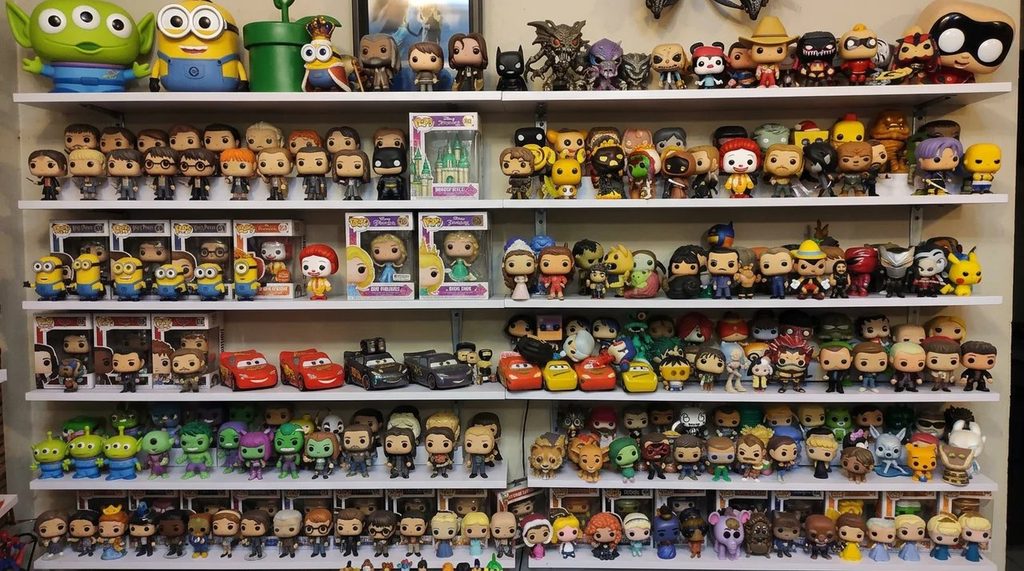
The Smart Middle Path
Most experienced sellers with large collections don’t pick just one of these options. They split their collection based on the sorting work described earlier.
Pull out anything you’ve identified as a genuine grail or a strong exclusive. Then consider listing those individually where the right collector can find them and pay a real premium. From there, sell the rest, which is usually the overwhelming majority of the collection, as a bulk lot to a dedicated buyer.
This approach captures extra value where it actually exists, without trying to force that same individual-listing effort onto hundreds of common Pops that were never going to command a premium in the first place. It’s the difference between spending real effort where it pays off and spending the same effort everywhere out of habit.
What to Expect When You Sell in Bulk
If you decide the bulk route makes sense for some or all of your collection, it helps to know what a buyer is actually looking for, so your offer comes back accurate the first time.
Condition matters, even for common Pops. Boxes with heavy shelf wear, sun fading, or damage are worth less than clean ones, even for the exact same figure. If your collection has been stored carefully, that’s worth mentioning when you submit it.
A rough, honest count matters more than a perfect inventory. You don’t need to identify every single figure by name before reaching out. What you do need is an honest estimate of how many Pops you’re sending and their general condition, since a buyer’s offer is built around that information.
Mixed collections are completely normal. Nobody expects a large Funko Pop collection to be one uniform set of matching figures. A messy mix of franchises, eras, and box conditions is exactly what most bulk buyers are used to sorting through.
How to Sell Your Large Funko Pop Collection to Us
We buy Funko Pop collections of all sizes, and honestly, this is exactly the kind of sale we’re built to handle well.
Use our online toy pricer or app to tell us roughly what you have. A photo of your collection and a rough count is usually all we need to get started.
From there, we’ll review what you’ve submitted and send back a fair offer, typically within a couple of days. If you accept, we’ll arrange shipping and get you paid once your collection arrives and checks out.
There are no listing fees. No photographing hundreds of individual pieces yourself. No waiting on buyers one at a time for months on end. If you want a broader sense of what your collection might be worth, our guide on whether your Funko Pops are actually worth anything.
Get a free quote on your Funko Pop collection →
People Also Ask…
There’s no exact cutoff, but anywhere from a hundred pieces on up is usually where individual listing stops making practical sense. If the idea of photographing and listing each one sounds overwhelming, that’s a good sign you’re in bulk territory.
No. A rough total count and a general sense of condition is enough to get started. You don’t need to identify every individual figure ahead of time.
If you’ve identified anything that looks like a genuine grail or a strong exclusive, it’s often worth setting those aside and researching them further, or listing them individually. The rest of a large collection can still move quickly as a bulk sale.
On a per-item basis, usually yes. But individual selling across a large collection means an enormous amount of listing work spread out over a long period. Bulk selling trades some of that top-end price for speed and simplicity.
Box damage, shelf wear, sun fading, and crushed corners all reduce value, even on common figures. Clean, well-stored boxes are worth more than the same figures in rough shape.