When NeeDoh went viral, something predictable happened. Demand shot past what Schylling could supply, shelves emptied out, and counterfeiters moved in to fill the gap.
That’s not a guess. It’s the same pattern that plays out with every viral toy. High demand plus low supply equals an opening for cheap knockoffs, and NeeDoh has been no exception. If you’re buying, selling, or just trying to figure out what’s sitting in your own collection, knowing how to spot a fake matters more than ever right now.
This guide walks through the checks that actually work, the ones collectors and reviewers have been using since the counterfeits started showing up.
Why This Matters for Sellers, Not Just Buyers
If you’re planning to sell your NeeDoh collection, this isn’t just a buyer’s problem.
A lot of the sealed inventory sitting in bins right now didn’t come straight from a store shelf. It came from third-party sellers online, purchased during the worst of the shortage when people were desperate to grab whatever they could find. If that’s where your collection came from, there’s a real chance some of what you have isn’t authentic.
Buyers on the resale market are more cautious than they used to be, and any legitimate buyer is going to check what you’re selling before paying for it. Catching a fake in your own collection before you try to sell it saves you an awkward conversation later, and it’s a lot faster to sort out now than after a buyer rejects it.
Check the Packaging First
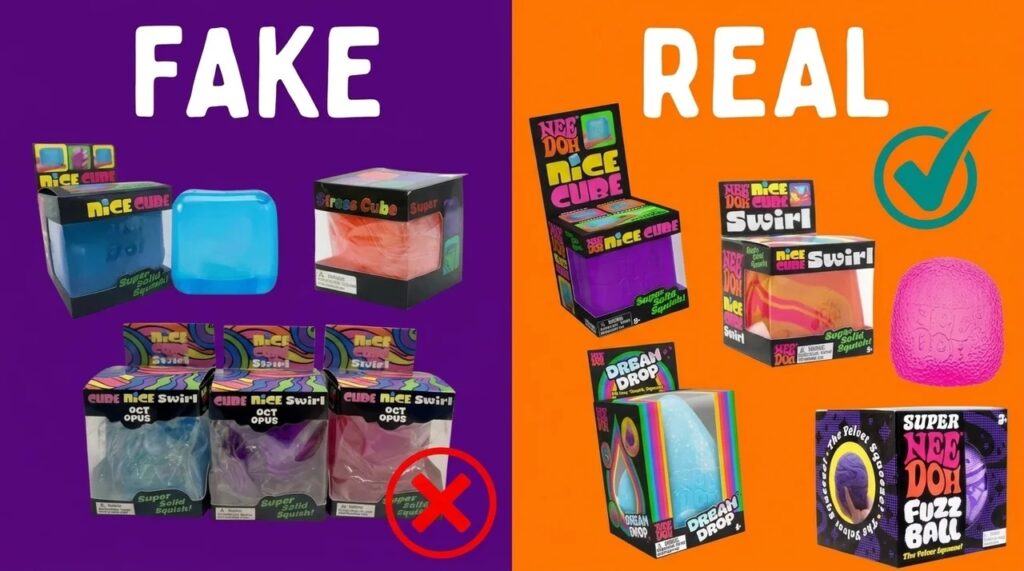
Authentic Schylling packaging is neat and consistent. The box has clear NeeDoh artwork, the Schylling logo, printed safety information, and clean, sharp printing. The top and bottom flaps are usually sealed with a round, secure sticker.
Fakes tend to give themselves away here before you even open the box. Look for printing that seems blurry, faded, or slightly misaligned. Watch for a tagline or logo that looks almost right but not quite, like text that’s cut off at the edge of the box or a font that doesn’t match what you’d expect from the real brand. If the item arrives in loose plastic wrap or a generic bag instead of proper retail packaging, that’s a strong warning sign on its own.
Look for the Branding on the Toy Itself
Genuine NeeDoh products carry the Schylling name or the NeeDoh wordmark somewhere on the toy, not just on the box. Most styles have this molded or stamped directly into the material, usually on the bottom.
Counterfeits often skip this step entirely, since it adds cost to manufacture. A smooth, blank bottom with no markings at all is a common sign of a fake. So is a logo that’s present but looks slightly off, printed in the wrong font or positioned oddly compared to genuine pieces you can find pictured online.
Test the Squish
This is one of the most reliable checks, and you don’t need any special equipment to do it.
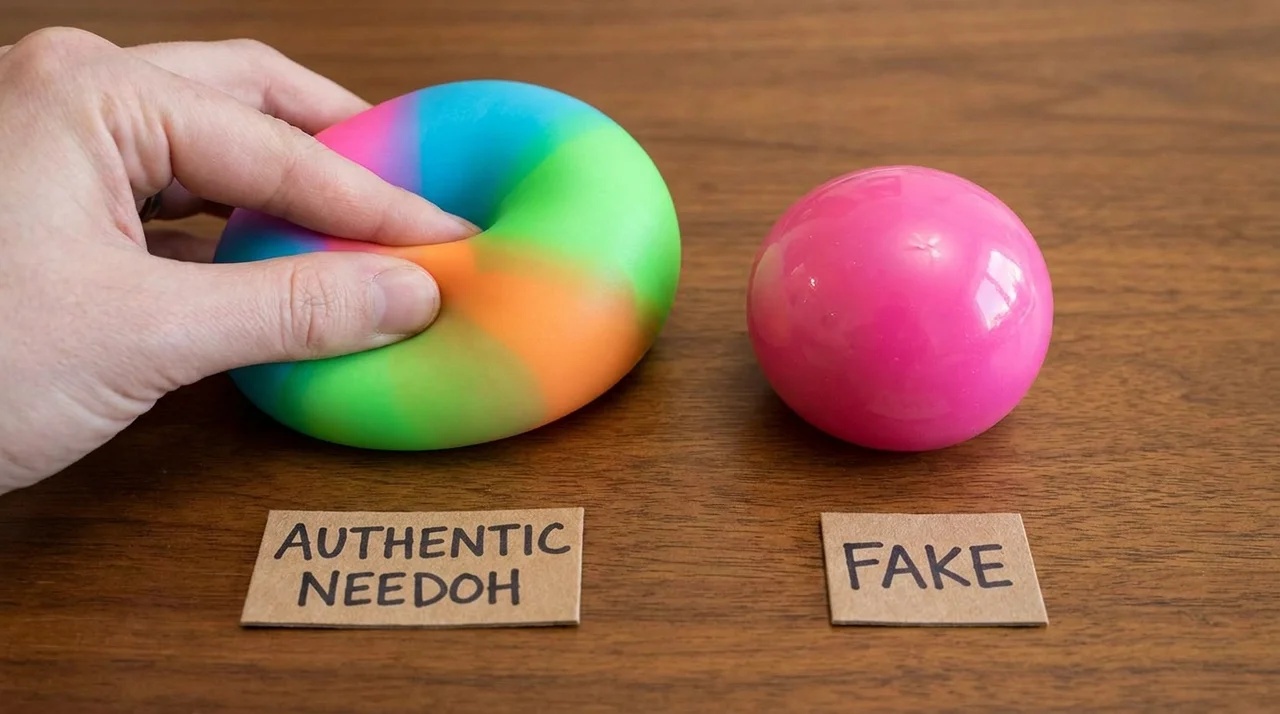
Authentic NeeDohs use a dense, dough-like material that Schylling calls its Super Solid Squish formula. Set a real Nice Cube on a flat surface, and it holds its shape. Squeeze it, and it slowly rises back to that same shape.
Counterfeits usually can’t replicate this. They’re often made with cheaper foam or a thinner gel filling, and they collapse into a soft blob the moment you stop holding them. If you set your NeeDoh down and it can’t hold its shape at all, that’s a strong sign it isn’t the real thing.
Trust Your Nose
Smell is an underrated but genuinely useful check.
A real NeeDoh has a faint, neutral smell when you first open it, since it’s made from a rubber-like material. That smell fades naturally within a day or two of airing out.
A strong, unpleasant chemical odor right out of the package, sometimes described as smelling like petrol or industrial glue, is a common red flag for a counterfeit. If something smells noticeably harsh when you open it, don’t ignore that.
Watch the Seller, Not Just the Product
Sometimes the fastest way to catch a fake is before it ever arrives, by paying attention to where it’s coming from.
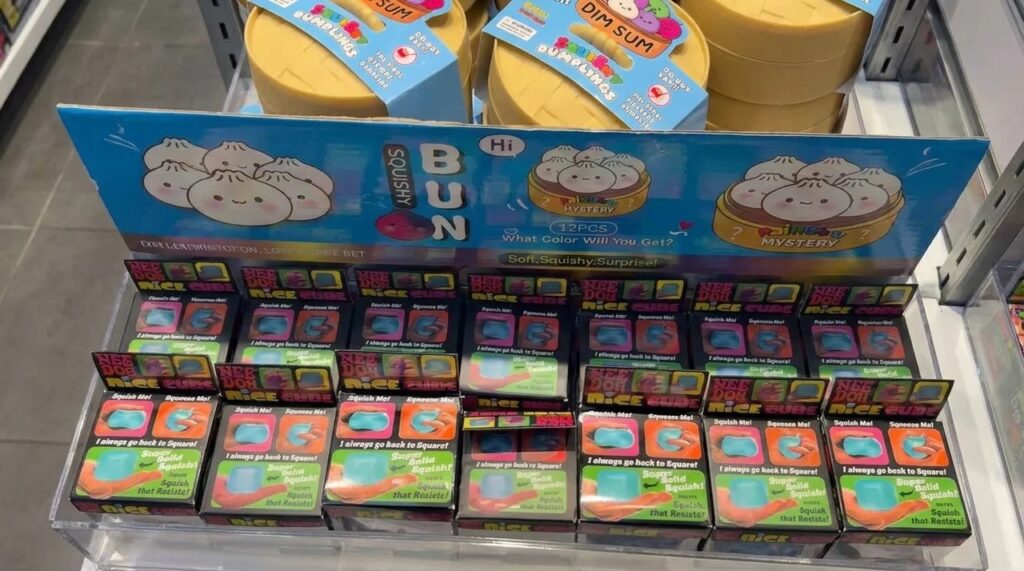
Be cautious with listings that describe the item generically, like “squishy stress cube,” without directly naming NeeDoh or Schylling. Watch for prices that seem dramatically low for a toy that’s supposed to be scarce. A steep discount on something in high demand is rarely a coincidence.
Check who’s actually selling the item on any marketplace listing, not just the search term that brought you there. A listing sold and shipped by the marketplace itself or by an established retailer is a safer bet than an unfamiliar third-party seller you’ve never heard of. If you’re buying directly from a website rather than a marketplace, stick to Schylling’s own site or retailers you can confirm are authorized.
None of These Checks Work Alone
Authenticity usually isn’t one single dead giveaway. It’s a pattern across several signals at once.
A real NeeDoh should pass every check here: clean packaging, visible branding, a firm squish that holds its shape, a mild smell, and a trustworthy seller. A counterfeit typically fails two or three of these at once, even if it manages to fake one or two convincingly. If something feels off on more than one front, trust that instinct.
What to Do If You Find a Fake in Your Collection
If you’ve gone through these checks and you’re confident a piece isn’t authentic, don’t try to sell it as genuine. Set it aside separately from the rest of your collection.
We only buy authentic, sealed NeeDoh, and we check what arrives against what’s been submitted. Sorting out any suspected fakes ahead of time keeps the process smooth and your quote accurate. If most of your collection checks out fine, our guide on what NeeDoh toys are actually worth in 2026 is a good next stop to understand what the legitimate pieces might be worth.
Sell Your Authentic NeeDoh Collection to Us
Once you’ve confirmed what you have is genuine, here’s how to turn it into cash.
Step 1 — Connect. Tell us what you have. A rough count and a photo of your collection is enough to get started.
Step 2 — Get a quote. We review your submission and send back an offer, usually within 48 hours.
Step 3 — Send and get paid. Like the offer? We send a prepaid shipping label. Once your collection arrives and we check it against your submission, you’re paid within 48 hours by check, Venmo, or PayPal.
There are no listing fees. No photographing dozens of pieces yourself. No waiting on buyers one at a time. If you’ve got a larger lot to sell once it’s sorted, our guide on how to sell a bulk NeeDoh collection walks through that process in more detail.
Frequently Asked Questions
The shortage created the opening. When demand shot past what Schylling could supply and shelves emptied out, counterfeiters stepped in to sell cheap look-alikes to buyers who couldn’t find the real thing in stores.
The squish test is quick and reliable. Set it on a flat surface. A real one holds its shape. A fake usually collapses into a soft blob almost immediately.
Not always, but it’s a real warning sign. A dramatic discount on a toy that’s supposed to be scarce is one of the most common signals of a counterfeit or scam listing.
It’s possible, but the logo often looks slightly off, whether that’s the font, the placement, or the print quality. Compare it closely against images of an authentic product if you’re unsure.
Set it aside separately from your authentic collection. Don’t try to sell it as genuine. If you bought it recently, check whether the seller or payment provider offers any protection for counterfeit or misrepresented items.